
What Is the New Era of AI Search
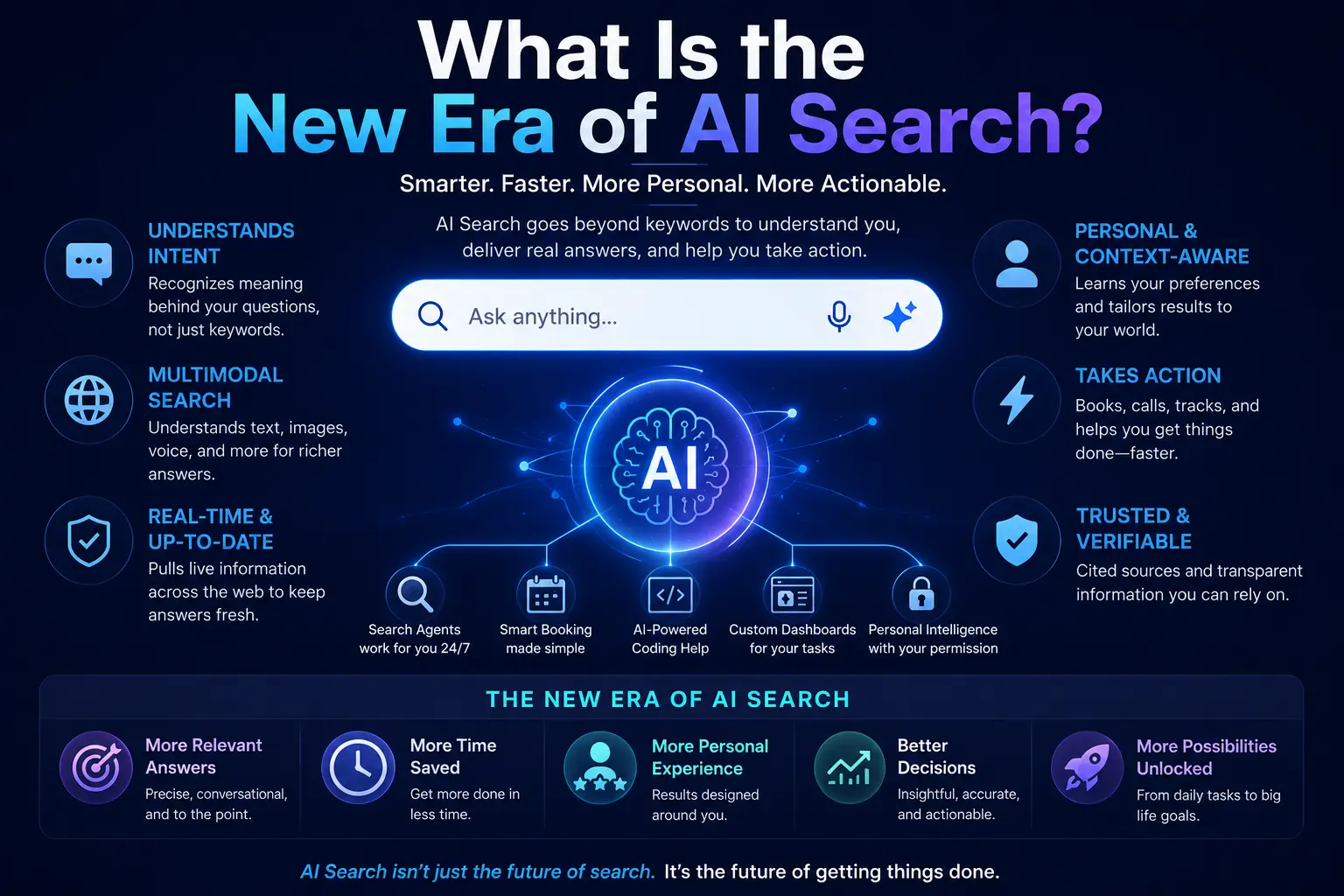
What’s the New Age of AI Search
Now, the search is not just about typing a keyword and scrolling through ten blue links. This new era of AI search is changing the way people search for information, compare products, plan tasks and make decisions online. Companies such as Google, Microsoft, OpenAI and Perplexity AI are developing systems that can understand context, user intent and real-world needs, rather than simply matching keywords.
This is leading to a more personalized, action-oriented, intelligent search experience. It’s also changing how companies create new content, how marketers do SEO, and how users consume information on a daily basis.
Search Is Becoming More Human
Traditional search engines mainly focused on indexing pages and ranking them based on backlinks, keywords, and technical SEO. AI search is moving beyond that model.
Modern AI search systems can now:
- Understand conversational questions
- Summarize information from multiple sources
- Track ongoing tasks in real time
- Generate direct answers
- Personalize results based on user context
- Help users take actions instead of only showing links
For example, someone searching for an apartment no longer needs to check multiple websites every day. AI search agents can continuously monitor listings, compare updates, and notify users when a property matches their exact requirements.
This creates a more practical and real life content experience because the search engine is helping users solve problems, not just locate websites.
The Rise of Search Agents
One of the biggest developments in the new era of AI search is the introduction of search agents. These are AI-powered assistants that work in the background and continuously search for updates related to a user’s interests or tasks.
According to recent announcements from Google, information agents can monitor news sites, blogs, finance data, shopping updates, sports information, and social content in real time. Instead of manually searching again and again, users can rely on AI agents to track changes automatically.
This changes the meaning of search itself. Search is no longer a one-time activity. It becomes an ongoing process powered by artificial intelligence.
Some practical use cases include:
- Tracking sneaker releases from professional athletes
- Monitoring stock or finance updates
- Finding local services with live availability
- Watching for apartment listings
- Managing event planning or travel tasks
This is where expertise and first content become more important. AI systems prefer content that is accurate, updated, and genuinely useful to users.
AI Search Is Moving Toward Action
Another major shift is that AI search is becoming action-oriented. Instead of only showing information, search engines are beginning to help users complete tasks directly.
For example, users can now search for local experiences such as karaoke rooms, home repair services, beauty appointments, or pet care options. AI systems combine pricing, availability, reviews, and direct booking links in one experience.
In some cases, AI can even contact businesses on behalf of users.
This changes how businesses need to approach digital visibility. Brands now need content with real answers, structured information, updated business details, and trustworthy expertise. Generic SEO pages written only for rankings are becoming less effective.
AI Search and Personalized Intelligence
Another important part of the new era of AI search is personalized intelligence. AI systems are becoming more context-aware by connecting with tools such as email, photos, and calendars.
This allows search engines to deliver more relevant recommendations and reminders based on individual user activity.
For example:
- A traveler may receive flight reminders connected to calendar events
- A shopper may receive updates related to saved preferences
- A student may get learning suggestions based on previous searches
- A business owner may receive personalized productivity recommendations
At the same time, privacy and transparency are becoming important concerns. Users want control over what data is connected and how AI systems use it.
Why Fresh Content Matters More Than Ever
The rise of AI search is also changing content creation strategies. Search engines increasingly prioritize fresh content that delivers real answers and updated information.
AI-generated spam, keyword stuffing, and recycled articles are becoming easier for modern systems to detect. Content that performs well today usually includes:
- Real-world examples
- First-hand experience
- Expert insights
- Updated information
- Clear structure
- Helpful answers for users
This means businesses and creators must focus more on quality than volume.
For SEO professionals, the future is not only about ranking pages. It is about creating useful content ecosystems that AI systems can trust and recommend.
The Future of AI Search
The new era of AI search is still evolving, but one thing is clear. Search engines are becoming more intelligent, more conversational, and more connected to real-world actions.
Users now expect direct answers, personalized experiences, and faster decision-making support. Businesses that create expertise-driven content with real answers will have a stronger chance of staying visible in AI-powered search environments.
The future of search is not only about finding information. It is about helping people complete tasks, solve problems, and make smarter decisions in everyday life.
The new era of AI search is changing the internet from a keyword-based system into an intelligent experience built around user intent, real-time understanding, and practical actions. Search is no longer only about finding websites. It is becoming a system that understands questions, tracks ongoing tasks, delivers direct answers, and helps users make decisions faster.
AI-powered search engines are now capable of understanding conversations, summarizing information from multiple sources, monitoring updates automatically, and creating more personalized experiences. Features such as search agents, real-time web grounding, and personalized intelligence show that search is moving toward a more human-centered model.
This shift is also changing the future of SEO and digital marketing. Fresh content, real-life examples, expertise, and content with real answers are becoming more valuable than generic articles written only for rankings. Businesses that focus on trust, clarity, and user-focused information will have a stronger chance of staying visible in AI-powered search results.