
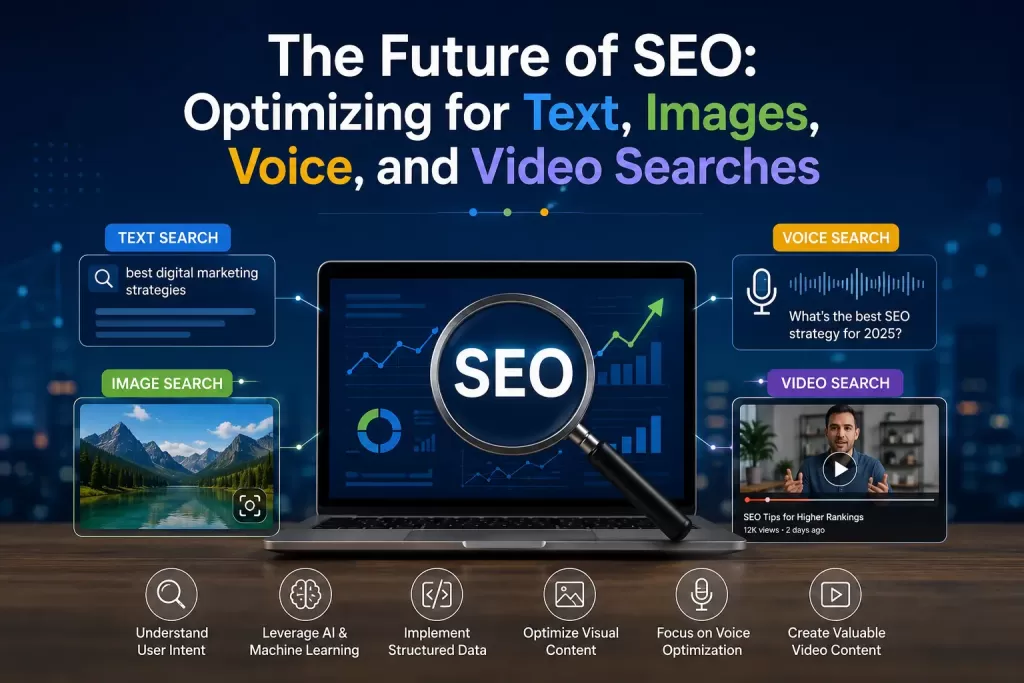
The Future of SEO: Optimizing for Text, Images, Voice, and Video Searches
Introduction
Search engine optimization is changing faster than ever before. A few years ago, SEO mainly focused on ranking webpages through keywords, backlinks, and written content. Today, search behavior looks very different. People search using voice assistants while driving, upload images to find products, watch short videos for solutions, and ask conversational questions to AI-powered search tools.
This shift has introduced what experts call multimodal search. Instead of understanding only typed text, search engines can now process images, voice commands, videos, and written queries together. Technologies such as Google Lens, AI search assistants, and visual recognition systems are pushing SEO into a completely new direction.
For businesses, bloggers, and website owners, this means traditional SEO methods alone are no longer enough. Modern SEO now requires content that can be understood visually, contextually, and conversationally.
How Search Behavior Has Changed in Real Life
The rise of smartphones and AI tools has changed the way people search online in everyday situations. Imagine someone walking through a shopping mall and noticing a pair of shoes they like. Instead of typing a long description into Google, they simply take a photo using Google Lens to find similar products online.
Another common example is voice search. Many users now ask their phones questions naturally, such as, “Where is the best seafood restaurant near me?” or “How do I clean white sneakers?” Search engines no longer rely only on exact keywords because people speak differently than they type.
Video search is also growing rapidly. Instead of reading long articles, users often prefer quick tutorial videos for cooking, repairing gadgets, fitness workouts, or product reviews. Search engines understand this behavior and increasingly prioritize multimedia content in results.
These real-life changes show why SEO strategies must evolve beyond traditional text optimization.
What Is Multimodal Search?
Multimodal search refers to a search engine’s ability to understand and combine multiple types of input at the same time. This can include text, voice, images, and video.
For example, a user might upload a picture of a living room and ask, “Where can I buy this type of sofa?” The search engine analyzes the image, understands the spoken or typed question, and then displays shopping results, reviews, and videos.
Search engines use technologies such as artificial intelligence, image recognition, natural language processing, and speech analysis to understand these complex search patterns.
Because of this, SEO is no longer only about keywords. It is now about helping search engines understand the complete meaning and context behind your content.
Why Structured Data Matters More Than Ever
One of the biggest changes in modern SEO is the importance of structured data. Structured data, also called schema markup, helps search engines understand what a webpage contains.
For example, if a webpage includes a recipe, product, or video, schema markup tells search engines exactly what type of content is present. This improves the chances of appearing in rich snippets, AI summaries, voice responses, and visual search results.
Businesses using eCommerce websites can especially benefit from Product schema because search engines can quickly identify product names, prices, ratings, and availability.
Similarly, VideoObject schema helps search engines understand video content more accurately. This becomes important as video-based search continues to grow.
Without structured data, search engines may struggle to interpret multimedia content properly.
The Growing Importance of Visual SEO
Visual search is becoming a major part of online discovery. Search engines are now advanced enough to analyze objects, colors, patterns, and text within images.
However, search engines still rely on supporting information to fully understand visual content. This is why image optimization remains essential.
Website owners should use descriptive image file names instead of generic names like “IMG001.jpg.” A file name such as “wooden-office-desk.jpg” gives clear context to search engines.
Alt text is equally important because it helps both accessibility and SEO. Good alt text describes the image naturally instead of forcing keywords unnecessarily.
Image speed also affects rankings. Large image files slow down websites, especially on mobile devices. Modern image formats such as WebP and AVIF reduce file size while maintaining quality.
Practical SEO Strategies for Multimodal Search
To remain visible in modern search results, businesses and content creators should focus on the following SEO improvements:
- Use structured data such as Product, ImageObject, FAQ, and VideoObject schema.
- Optimize image file names, captions, and alt text using natural descriptions.
- Compress images with modern formats like WebP or AVIF for faster loading.
- Create conversational content that matches how users speak during voice searches.
- Add subtitles and transcripts to videos for better accessibility and indexing.
- Improve mobile performance because most multimodal searches happen on smartphones.
Why Video SEO Is Becoming Essential
Video content now appears in almost every major search platform. Tutorials, product demonstrations, interviews, and educational videos attract high engagement because users often prefer visual learning.
Search engines analyze video titles, descriptions, subtitles, watch time, and engagement signals to understand video quality.
Creators can improve video SEO by using accurate titles, adding transcripts, creating clear thumbnails, and organizing content with timestamps.
Embedding videos inside related blog articles can also increase user engagement and improve time spent on a webpage.
User Experience Will Decide Future Rankings
Modern SEO is no longer just about technical optimization. User experience has become a major ranking factor.
Search engines now measure how quickly pages load, how easily users navigate content, and whether the website works properly on mobile devices.
Websites with slow loading speeds, poor design, or confusing layouts may struggle to rank even if the content is good.
Clear structure, readable content, and useful information create better engagement signals, which help improve long-term visibility.
Conclusion
The future of SEO is moving toward a more intelligent and human-centered search experience. Search engines are becoming better at understanding images, voice commands, videos, and natural conversations.
Businesses that continue to focus only on traditional keyword strategies may find it harder to compete in the coming years.
The most successful websites will be those that combine technical optimization with useful, real-world content across multiple formats. Structured data, visual optimization, conversational writing, and strong user experience are no longer optional.
As multimodal search continues to grow, SEO will become less about manipulating algorithms and more about helping users find the right information in the easiest possible way.